
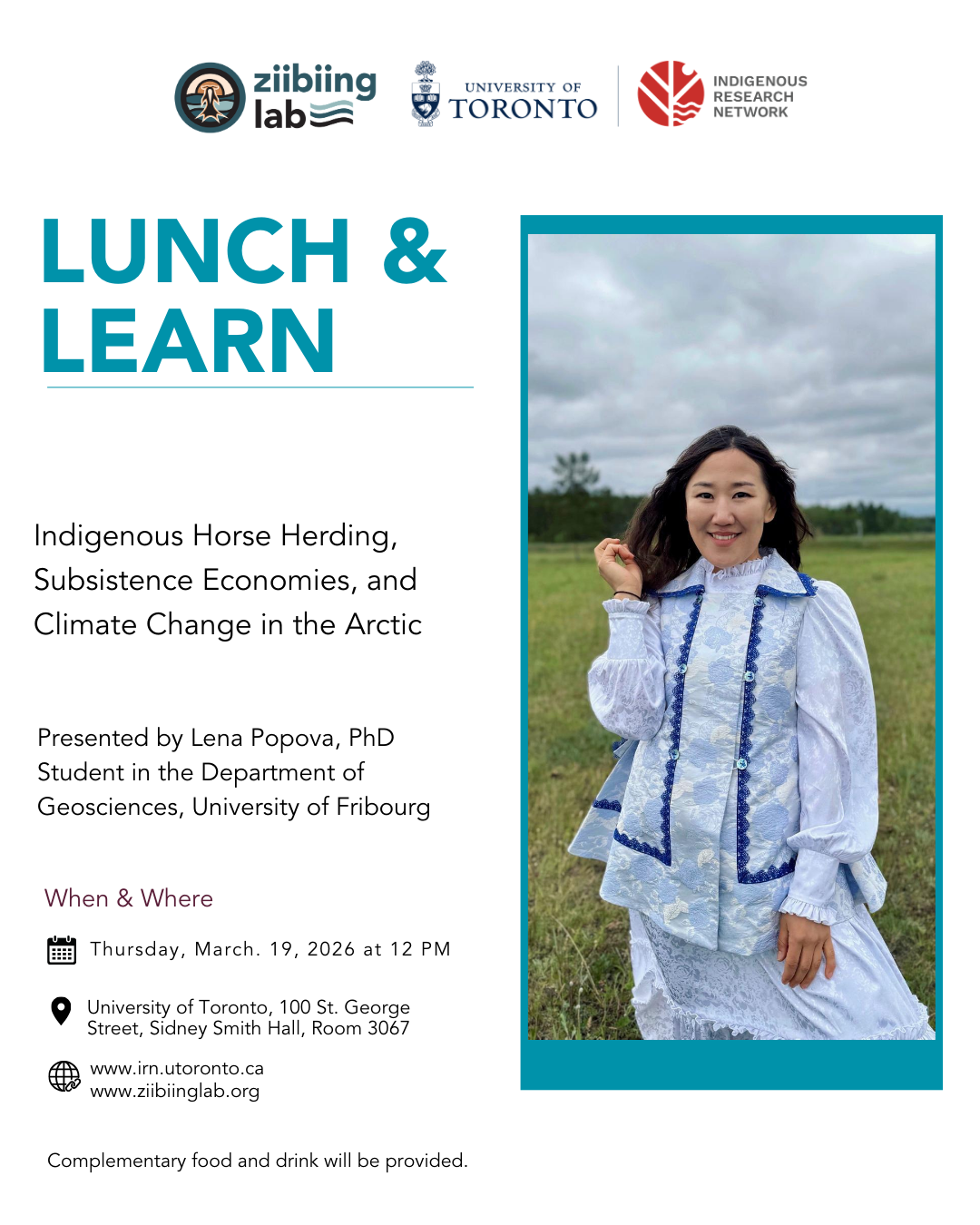
Indigenous Horse Herding, Subsistence Economies, and Climate Change in the Artic
This talk will give an overview of Arctic traditional horse herding as one of the Indigenous subsistence practices of the Republic of Sakha (Yakutia). It discusses the characteristics and the spiritual and material importance of Sakha horses and horse-herding practices to inform an overall understanding of this traditional subsistence activity. Secondly, by conducting in-depth semi-structured interviews with Indigenous Sakha horse herders, this study explores the ways in which Indigenous subsistence practices are evolving and reacting to the climate and environmental changes. Results show that climate change is altering local ecosystems and introducing new challenges for communities in Central Yakutia. Local herders describe climate change as a complex interplay of diverse transformations rather than a singular phenomenon. While historical adaptation strategies relied on the flexibility of traditional practices, today, this flexibility is often hindered by non-climatic factors.
About the presenter
Lena is Sakha from the Republic of Sakha (Yakutia) in north-eastern Siberia, Russia. She is pursuing a PhD in Geography at the University of Fribourg, Switzerland. Her research, titled “Science and Arctic Indigenous Knowledge in the Anthropocene in the Context of Climate Change,” examines the ontology and epistemology of Sakha knowledge, foregrounding the notions of space and place. Alongside her main research, she is also interested in Indigenous economies.